

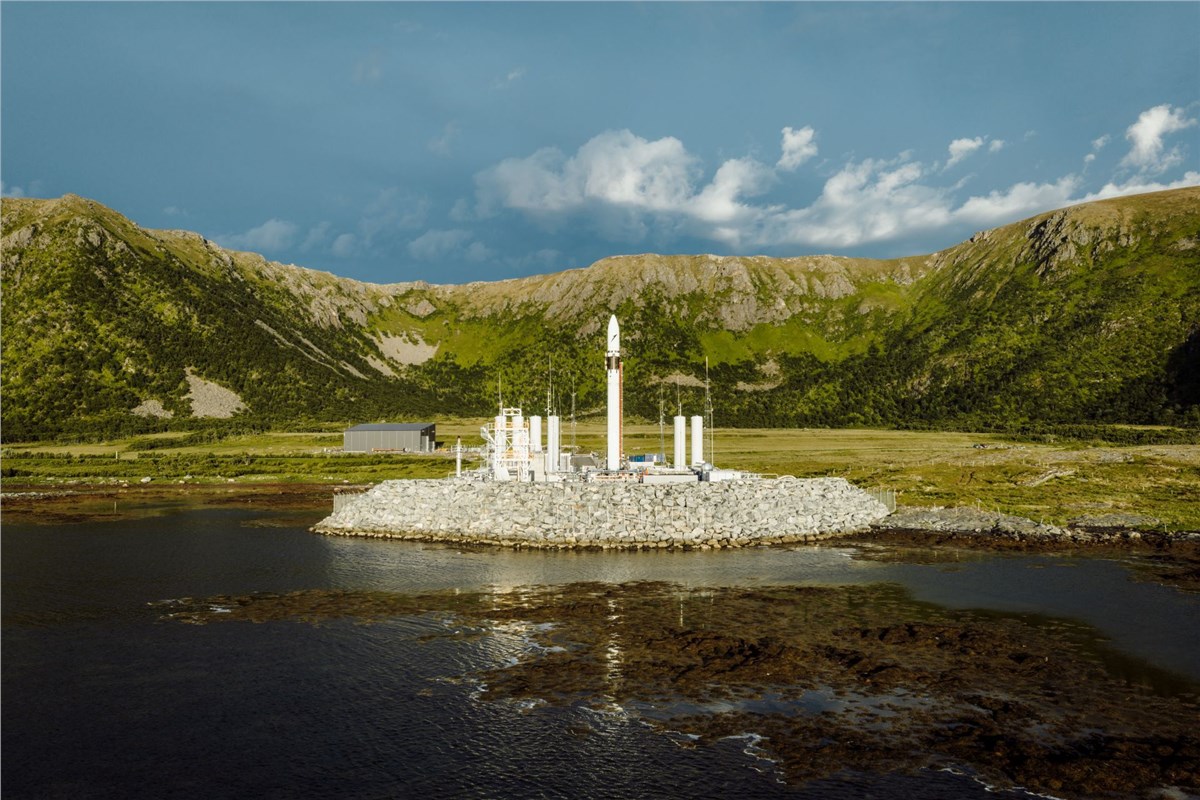
Isar Aerospace has signed a contract with the European Space Agency (ESA) under the European Launcher Challenge (ELC), securing approximately €200 million in programme commitments. The agreement will support Isar Aerospace in accelerating development of its next generation of launch vehicles, expanding test and launch infrastructure to increase launch cadence, and supporting future missions.
“Europe is putting serious resources behind its space sovereignty and today’s agreement with ESA is another proof point,” said Stella Guillen, Chief Commercial Officer of Isar Aerospace. “Isar Aerospace is driving Europe’s next generation of space capabilities and setting the pace for the industry. Having already delivered the first major program milestones, we are leading the mission to secure Europe’s independent access to space.”
“This milestone kicks off the European Launcher Challenge, encouraging competition among European launch providers,” said Géraldine Naja, ESA’s Director of Space Transportation. “Through this funding, ESA is supporting the development of European launch capabilities, helping to strengthen Europe’s competitiveness and broaden the range of launch services available to institutional and commercial customers.”
“With these contracts, ESA is turning ambition into action. ESA has set the Challenge and created the conditions for new European launch providers to accelerate their ramp-ups and grow,” said Lucía Linares, ESA’s head of strategy and launches for Space Transportation. “Now it is up to the challengers to prove they can deliver reliable launch services for Europe and compete: getting to space is not easy and never guaranteed.”
Isar Aerospace covers much of its launch value chain in-house, including rocket development and manufacturing, test infrastructure and spaceport construction. The company’s current launch manifest extends through 2028 and includes missions for ESA and other customers around the world.
The ELC agreement comes as Isar Aerospace continues to develop its launch capabilities and expand its infrastructure. The company said the agreement reflects demand for sovereign launch services and customer confidence from commercial organisations, governments and defence institutions.
