

The U.S. Army has selected Boeing and Anduril to advance to the next phase of competition for the Integrated Fires Protection Capability (IFPC) Increment 2 Second Interceptor programme.
The interceptor is being developed to protect fixed and forward operating bases against cruise missiles, militarised drones and other aerial threats.
Anduril Expands Solid Rocket Motor Production
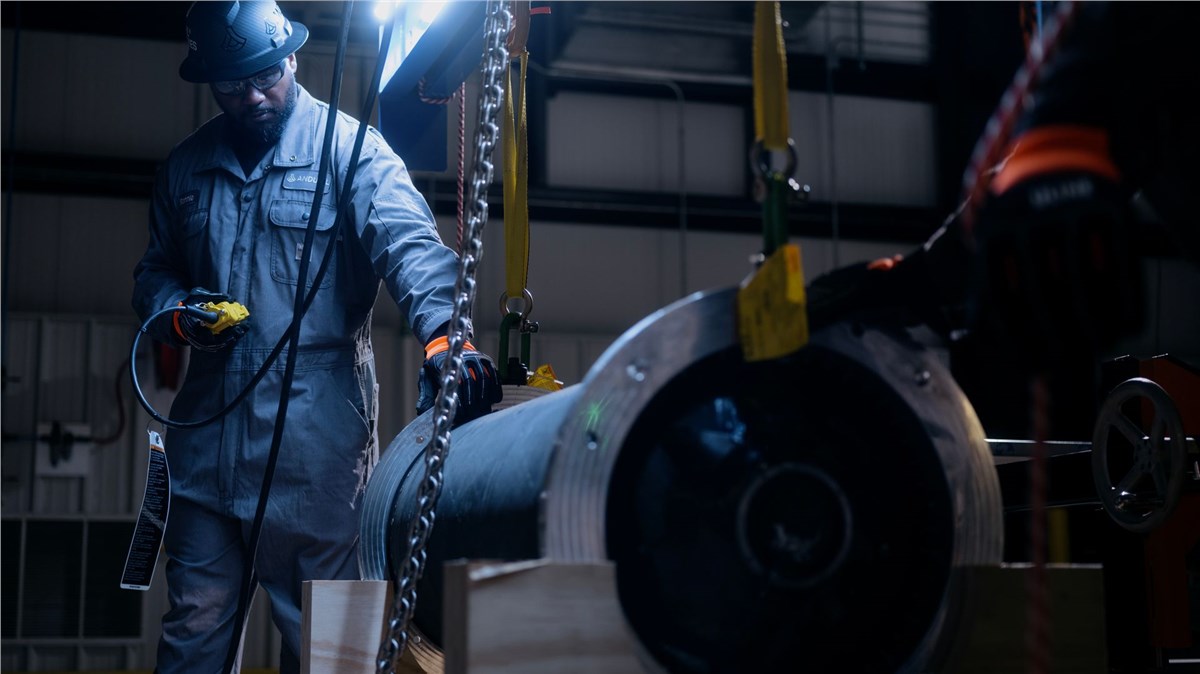
Anduril’s approach includes the use of its Mississippi Solid Rocket Motor (SRM) Complex, a 450-acre facility designed to increase solid rocket motor production capacity and support the supply of interceptors.
Anduril said it invested more than $100 million of its own capital, alongside $58 million in Defense Production Act funding, to develop the facility.
The complex includes a high-speed, bladeless mixer and a manufacturing line designed to conduct multiple production steps in parallel. The company said this approach reduces production times and provides flexibility to manufacture different motor configurations on a single line.
Boeing-Anduril Interceptor
The Boeing-Anduril interceptor combines technologies from both companies.
At its core is an Anduril-manufactured solid rocket motor, using propulsion technologies from the company’s existing SRM programmes.
The interceptor also incorporates Boeing seeker technology and a compact airframe, combined with Anduril’s propulsion system.
The companies are developing the system as a high-performance, mass-producible midrange interceptor.
The interceptor is intended to operate in the midrange engagement band between short-range point-defence systems and longer-range systems designed for higher-value targets.
Moving Into the Next Competition Phase
Anduril began work on the concept in 2024, when it partnered with Boeing to explore technologies that could be developed for the IFPC Increment 2 Second Interceptor programme.
The latest selection moves the Boeing-Anduril team into the next stage of the competition, covering detailed design, system development, integration and demonstration.
The process will culminate in a competitive capability demonstration against U.S. Army requirements.
